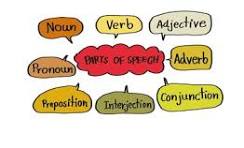
Days 1 : parts of speech
DAY 1
PART A
Parts of Speech বা পদ প্রকরণ কাকে বলে? এটি কত প্রকার ও কি কি ?


Parts of Speech কাকে বলে?
বাক্যে ব্যবহৃত প্রত্যেকটি শব্দকে এক একটি Part
of Speech বলে।
Every
single word we use in a sentence is
called a Part of Speech.
Example:
o Karim is a good boy.
o He goes to school
o Ashik eats Rice.
Sentence:
"Hey! I saw a tall man and his dog running very
fast through the park."
অনুবাদ:
"এই! আমি একজন লম্বা মানুষ এবং তার কুকুরকে পার্কের মধ্য দিয়ে খুব দ্রুত দৌড়াতে দেখেছি।"
Parts of Speech বিশ্লেষণঃ
|
Parts of Speech |
Word(s) in the Sentence |
Bengali ব্যাখ্যা / অর্থ |
|
Interjection |
Hey! |
আবেগ প্রকাশকারী শব্দ – এই! / শুনো! |
|
Pronoun |
I |
সর্বনাম – আমি |
|
Verb |
Saw, Running |
ক্রিয়া – দেখেছি, দৌড়াচ্ছে |
|
Adjective |
Tall |
বিশেষণ – লম্বা (noun
"man" এর গুণ) |
|
Noun |
Man, Dog, Park |
বিশেষ্য – মানুষ, কুকুর, পার্ক |
|
Adverb |
Very, Fast |
ক্রিয়া বা বিশেষণকে বিশেষিত করে – খুব দ্রুত |
|
Preposition |
Through |
সম্পর্ক নির্দেশ করে – মধ্য দিয়ে |
|
Conjunction |
And |
সংযোগকারী – "man" এবং "dog" কে
যুক্ত করেছে |
·
Preposition
(পদান্বয়ী অব্যয়)
·
Interjection
(আবেগ সূচক অব্যয়)
Noun বা বিশেষ্য কাকে বলে? Noun কত প্রকার ও কি কি?

Noun কাকে বলে?
যে word দ্বারা কোন কিছুর নাম প্রকাশ করা হয় তাকেই noun বলে । আমাদের চোখের সামনে যা দেখি সেগুলোর নামকেই noun বলে। এটি দ্বারা কোন ব্যক্তি, বস্তু, প্রাণী ,স্থান ,ঘটনা ইত্যাদির নাম বোঝায়।
Example:
o
Karim does
not like to go to school. এই বাক্যে Karim একজন
ব্যক্তির
নাম।
o
Kuwait is
a Muslim country. এখানে
কুয়েত
একটি
দেশের
নাম।
o
Diamond is
very valuable. ডায়মন্ড
একটি
বস্তুর
নাম।
Noun চেনার কিছু নিয়ম
✅
Noun চেনার উপায় – Rules with Explanation & Examples
☛ Rule 1: Suffix দেখে Noun চেনা যায়
Ending (Suffix):
- –ness, –tion, –sion, –ty, –ment, –th, –ance, –ence,
–ism, –age, –ure, –hood, –dom, –ship, –cy, –let, –ock, –kin, –ar, –ief
✅ উদাহরণ:
✅ Suffix | Example | Bengali Meaning of Example
Suffix
Example
Bengali Meaning of Example (বাংলা অর্থ)
–ness
Kindness
দয়া
–tion
Creation
সৃষ্টি
–sion
Decision
সিদ্ধান্ত
–ty
Honesty
সততা
–ment
Enjoyment
আনন্দ
–th
Strength
শক্তি
–ance
Performance
কার্যসম্পাদন
–ence
Patience
ধৈর্য
–ism
Buddhism
বৌদ্ধধর্ম
–age
Baggage
লাগেজ / মালপত্র
–ure
Failure
ব্যর্থতা
–hood
Childhood
শৈশব
–dom
Freedom
স্বাধীনতা
–ship
Friendship
বন্ধুত্ব
–cy
Democracy
গণতন্ত্র
–let
Booklet
ছোট বই
–ock
Hillock
ছোট পাহাড় / টিলা
–kin
Lambkin
ছোট মেষশাবক (স্নেহময়)
–ar
Beggar
ভিখারি
–ief
Relief
উপশম / আরাম
☛ Rule 2: Article, adjective, preposition, possessive এর পর একমাত্র
word = Noun
✅ উদাহরণ:
- A while
→ ‘a’ = article → ‘while’ = noun
- The answer
→ ‘the’ এর পর ‘answer’ = noun
- My brother
→ ‘my’ = possessive → ‘brother’ = noun
- In school
→ preposition ‘in’ এর পর ‘school’ = noun
☛ Rule 3: No, many, much, object এর পর Noun হয়
✅ উদাহরণ:
- No joke
→ ‘joke’ = noun
- Many students
→ ‘students’ = noun
- He gave me help
→ ‘help’ = noun
☛ Rule 4: Main verb-এর object = Noun হয়
✅ উদাহরণ:
- He wants help
→ ‘help’ = noun
- They need support
→ ‘support’ = noun
☛ Rule 5: Article ও Preposition-এর মাঝের word = Noun
✅ উদাহরণ:
- The go of the world
→ ‘go’ = noun
- A piece of cake
→ ‘piece’ = noun
☛ Rule 6: Parts of Speech-এর নামগুলোও
Noun হয়
✅ উদাহরণ:
- Noun is a part of speech → ‘Noun’ = noun
- Adjective describes noun → ‘Adjective’ = noun (term)
Noun এর প্রকারভেদ
Nouns are classified into five types.
·
Proper Noun (নাম বাচক বিশেষ্য)
·
Common Noun (জাতিবাচক বিশেষ্য)
·
Collective Noun (সমষ্টিবাচক বিশেষ্য)
·
Material Noun (বস্তুবাচক বিশেষ্য)
·
Abstract Noun (গুণবাচক বিশেষ্য)
Proper Noun (নাম বাচক বিশেষ্য):
যে Noun দ্বারা কোন নির্দিষ্ট ব্যক্তি, বস্তু বা স্থানের নাম বোঝায় তাকে Proper Noun বলে।
Example:
o
I like the story of Shakespeare. (Shakespeare নির্দিষ্ট
একজন
ব্যক্তির
নাম)
o
We planned to visit Sylhet. ( Sylhet নির্দিষ্ট একটি
জায়গার
নাম)
o
Have you ever seen the Tajmahal? (Tajmahal একটি
স্থাপনার
নাম)
Common Noun (জাতিবাচক বিশেষ্য):
যে Noun দ্বারা একই জাতীয় কোন ব্যক্তি, বস্তু বা প্রাণীকে নির্দিষ্ট করে না বুঝিয়ে সে জাতীয় সকলকে একসাথে বুঝায় তাকেই Common Noun বলে । যেমন, Student, Book, Dog, Flower etc.
.
Example:
o
Alex is a student. (Student দ্বারা
সকল
ছাত্র-ছাত্রীদেরকেই
বুঝানো
হয়েছে।
নির্দিষ্ট
কোন
ছাত্র
কিংবা
ছাত্রী
কে
আলাদা
করে
বুঝায়নি)
o
Dogs can
be very cute. ( Dog দ্বারা
সকল
জাতীয়
কুকুর
কে
বুঝানো
হয়েছে।
সেটা
যে
কোন
জাতের
কিংবা
ধরনের
বা
রঙের
হতে
পারে।
যে
কোন
দেশের
যে
কোন
কুকুর
হতে
পারে।)
o You love flower ( এখানে flower দ্বারা সবরকম ফুলকে বুঝানো হয়েছে। এটা যে কোন জাতের বা ধরনের ফুল হতে পারে। হতে পারে গোলাপ কিংবা টিউলিপ, শিউলী অথবা রজনীগন্ধা কিংবা যে কোন ফুল হতে পারে।)
Collective Noun (সমষ্টিবাচক বিশেষ্য):
Collective Noun দ্বারা কোন ব্যক্তি, বস্তু বা প্রাণীর সমষ্টি কে বুঝায়। যেমন, Club, Army, Class, Family, etc.
Example:
o
Our class took a
trip to Sundarbans.
o
Bangladeshi Army is
doing a great job in UN mission.
o
Each team contains
eleven players.
Material Noun (বস্তুবাচক বিশেষ্য):
যে Noun দ্বারা ওজন আছে কিন্তু গণনা করা যায় না এমন কিছুর নাম বোঝায় তাকেই Material Noun বলে। যেমন, Gold, Glass, Salt, Iron,
Silver, Cloth, Air, Milk, etc.
Example:
o
You can purchase a gold ring for your sister.
o
We may attain salt from sea-water.
o
Cotton dress
is my favorite.
Abstract Noun (গুণবাচক বিশেষ্য):
যে Noun দ্বারা কোন ব্যক্তি কিংবা বস্তুর গুণ, কাজের নাম কিংবা অবস্থা প্রকাশ করা হয় তাকে Abstract Noun বলে। যেমন, Liberty, anger, freedom, kindness, love, happiness, beauty, ইত্যাদি।
Example:
o
My love for you
cannot be measured.
o
His kindness is his
real beauty.
o
Her beauty makes me
crazy.
END
OF DAY 1 PART A
NOW
TIME FOR EXAM (10 MINUTES)
DAY 1
PART B
English Grammar Lecture: Pronoun (সর্বনাম)
🔹
Definition (সংজ্ঞা)
In
English:
A Pronoun is a word that is
used instead of a noun to avoid repetition.
Example:
- Rahim is a good boy. He goes to school
regularly.
(Here “He” replaces the noun “Rahim”.)
In
Bengali:
যে
শব্দটি
নাম বা noun-এর পরিবর্তে ব্যবহৃত হয়,
তাকে
Pronoun (সর্বনাম) বলে।
উদাহরণ:
- রাহিম ভালো ছেলে। সে নিয়মিত স্কুলে যায়।
(এখানে “সে” শব্দটি “রাহিম”-এর পরিবর্তে ব্যবহৃত হয়েছে।)
1) Personal Pronoun (ব্যক্তিবাচক সর্বনাম)
কাজ: নির্দিষ্ট ব্যক্তি/বস্তুকে নির্দেশ করে।
রূপভেদ: Person (1st/2nd/3rd), Number
(Sing./Plu.), Case (Subject/Object), Gender (he/she/it)।
টেবিল (মূল ফর্ম):
|
Subject |
Object |
Possessive
Adj. |
Possessive
Pronoun |
Reflexive |
|
I |
me |
my |
mine |
myself |
|
you |
you |
your |
yours |
yourself / yourselves |
|
he |
him |
his |
his |
himself |
|
she |
her |
her |
hers |
herself |
|
it |
it |
its |
— |
itself |
|
we |
us |
our |
ours |
ourselves |
|
they |
them |
their |
theirs |
themselves |
মূল নিয়ম:
- Antecedent agreement:
Noun-এর সাথে person/number/gender মিলে যাবে।
- Case:
Subject স্থানে I/We/He/She/They, Object স্থানে me/us/him/her/them।
- Possessive Adj.–এর পরে সবসময় noun
আসে (my book), আর Possessive Pronoun বার্তা সম্পূর্ণ
করে (This book is mine)।
- ‘its’–এ apostrophe নেই (❌ it’s
= it is / it has)।
উদাহরণ:
- She
loves her mother. I saw her yesterday.
- This pen is my pen → This pen is mine.
অনুশীলন (১): ফাঁকা স্থানে
দাও—
a) Rina and Toma are friends. ___ play chess.
b) The cat loves ___ kittens.
c) This seat is ___.
উত্তর: a) they b) its c) mine
2) Possessive Pronoun (অধিকারবাচক সর্বনাম)
কাজ: মালিকানা বোঝায়;
noun ছাড়াই বাক্য
সম্পূর্ণ হয়।
রূপ: mine, yours, his, hers, ours,
theirs. (⚠ “its” সাধারণত Possessive Pronoun হিসেবে একা
ব্যবহার হয়
না।)
সাধারণ ভুল: her’s, their’s—❌; সঠিক → hers, theirs।
উদাহরণ:
- That umbrella is hers.
- The choice is ours.
অনুশীলন (২):
Change: This is my car → This car is __ → mine.
3) Reflexive & Intensive Pronoun (আত্মবাচক/জোরারোপকারী)
Form: myself, yourself, himself, herself, itself, ourselves,
yourselves, themselves.
Reflexive (আত্মবাচক): Subject = Object (নিজের ওপর
কাজ
ফিরে
আসে)।
- He blamed himself. (সে নিজেকেই দোষ দিল)
Intensive/Emphatic (জোরারোপ): জোর
দেওয়ার
জন্য,
খালি
করলে
অর্থ
ঠিক
থাকে।
- The CEO himself signed the letter. (himself বাদ দিলে বাক্য ঠিক)
সাধারণ ভুল: each other/one another–এর সাথে reflexive মেশানো যাবে
না:
- We helped each other (✅), not ourselves (যদি পরস্পর বোঝাতে চাই)।
অনুশীলন (৩): Reflexive না Intensive?
a) She prepared the meal herself. → (Intensive)
b) He hurt himself while skating. → (Reflexive)
4) Demonstrative Pronoun (নির্দেশক: this/that/these/those)
কাজ: নির্দিষ্ট বস্তু/ব্যক্তিকে ইশারায় দেখায়; দূরত্ব ও
সংখ্যা বোঝায়।
- this (এটি, নিকট/একবচন), these
(এগুলো, নিকট/বহুবচন)
- that (ওটি/ওটা, দূর/একবচন), those
(ওগুলো, দূর/বহুবচন)
Tips: Speaker-এর কাছাকাছি = this/these; দূরে = that/those।
উদাহরণ: This is my bag. Those
are your shoes.
অনুশীলন (৪): দূরের একাধিক
বই:
“___ are my books.” → Those
5) Interrogative Pronoun (প্রশ্নবাচক)
Form: who, whom, whose, which, what (যখন noun-এর বদলে
দাঁড়ায়)।
- who
(subject), whom (object), whose (possessive),
- which/what—ব্যক্তি/বস্তু সম্পর্কে
পছন্দ/পরিচয় জিজ্ঞাসা।
ব্যবহার:
- Who
called you? (subject)
- Whom
did you call? (object; আধুনিক ইংরেজিতে অনেক সময় who–ও চলে)
- Whose
is this bag?
- Which
is your roll number? What is that?
অনুশীলন (৫):
“___ did you meet yesterday?” → Whom (বা কথ্যভাষায় Who)
6) Relative Pronoun (সম্পর্কসূচক)
Form: who, whom, whose, which, that (এছাড়া যেখানে/যখন—where/when
→ strictly relative adverb)।
কাজ: আগে বলা
noun (antecedent)–কে
refer করে
দুটি clause যুক্ত করে।
নিয়ম সংক্ষেপ:
- who/whom/whose
→ persons; which → things/animals; that → persons &
things (informal & restrictive)।
- whose
ব্যক্তি ও
বস্তুর মালিকানা—দুটিতেই (formal writing-এ বস্তুতেও গ্রহণযোগ্য: the car whose engine…)
- Punctuation:
Non-restrictive clause (অতিরিক্ত তথ্য)–এ কমা ও
who/which বেশি স্বাভাবিক; that সাধারণত restrictive-এ, কমা ছাড়া।
উদাহরণ:
- The boy who won the prize is my brother.
- The book that you gave me is rare.
- Dhaka, which is the capital of Bangladesh, is
crowded. (non-restrictive)
অনুশীলন (৬): সঠিক relative বসাও—
“The girl ___ I met yesterday is a coder.” → whom/that (কথ্য: who)
7) Indefinite Pronoun (অনির্দিষ্ট সর্বনাম)
Form: someone, somebody, something, anyone/anything,
everyone/everything, no one/nobody/nothing, each, either, neither, none, all,
both, few, many, several, some, any, much, little ইত্যাদি (context অনুযায়ী
pronoun/adjective দু’ভাবেই কাজ করতে
পারে)।
নিয়ম/সতর্কতা:
- everyone, each, either, neither—ব্যাকরণগতভাবে singular verb নেয়:
- Everyone is
happy. Neither was present.
- none
→ আধুনিক ব্যবহারে singular/plural—দুটিই চলে; formal-এ singular বেশি:
- None of the work is done. / None of the students are ready.
- some/any
countable/uncountable—দুটোতেই: some apples, some water।
উদাহরণ: Someone has called you. Few
know the truth.
অনুশীলন (৭):
“Each of the players ___ fit.” (is/are) → is
8) Reciprocal Pronoun (পারস্পরিক)
Form: each other, one another
কাজ: পরস্পরিক সম্পর্ক বোঝায়।
ভেদ (আধুনিক ব্যবহার): দুটো প্রায়
বিনিমেয়; ঐতিহ্যগতভাবে each other → ২ জন,
one another → ৩+
জন।
Possessive: each other’s / one another’s
- They love each other.
- We checked one another’s work.
অনুশীলন (৮):
“We should help ___ in crises.” → one another / each other
9) Distributive Pronoun (বন্টনবাচক)
Form: each, either, neither (ব্যক্তি/বস্তুকে পৃথকভাবে নির্দেশ করে)
নিয়ম: সাধারণত singular verb ও singular noun নেয়:
- Each
of the students has a book.
- Either
of the roads is safe.
- Neither
of them was late.
অনুশীলন (৯):
“___ of the two answers is correct.” → Either
(ঐচ্ছিক) Dummy/Expletive “it” (ব্যক্তিবাচকে বিশেষ ব্যবহার)
কাজ: আবহাওয়া, সময়,
দূরত্ব,
অব্যক্ত বিষয়—subject
হিসেবে
placeholder।
- It is raining.
/ It is 5 o’clock. / It is far from here.
সাধারণ ভুলগুলো এক নজরে
1.
❌ It’s color is blue → ✅ Its
color is blue.
2.
❌ Between you and I → ✅ Between
you and me (preposition-এর পরে
object case)।
3.
❌ Everyone have → ✅ Everyone
has.
4.
❌ The boy which came → ✅ The
boy who came.
5.
❌ Each other’s selves → ✅ each
other / one another (reflexive লাগবে না)।
মিশ্র অনুশীলনী (উত্তরসহ)
A) Fill in the blanks:
1.
___ is knocking at the door.
(someone/anyone)
2.
The car lost ___ wheels. (its/it’s)
3.
I met a man ___ daughter is a pilot.
(who/whose)
4.
Take ___ book; both are mine.
(either/neither)
5.
We saw the players ___ we cheered
yesterday. (whom/which)
উত্তর: 1) someone 2) its 3) whose 4)
either 5) whom
B) Identify the type:
- Those
are mine. → Demonstrative
- Hers
is red. → Possessive Pronoun
- They helped each other. → Reciprocal
- The girl who won is my sister. → Relative
- He blamed himself. → Reflexive
C) Correct the errors:
a) Every students are ready. → Every student is ready.
b) Between you and I, this is secret. → Between you and me, this is
secret.
c) Its a hot day. → It’s a hot day. / Or: It is a hot day.
দ্রুত রিভিশন কার্ড (১ মিনিটে)
- Personal:
I/me/my… (case-wise)
- Possessive:
mine/yours/hers/ours/theirs (noun ছাড়া)
- Reflexive/Intensive:
myself/ourselves… (নিজে/জোর)
- Demonstrative:
this/that/these/those (দূরত্ব+সংখ্যা)
- Interrogative:
who/whom/whose/which/what (প্রশ্ন)
- Relative:
who/which/that… (clause যুক্ত করে)
- Indefinite:
someone/each/none/some… (অনির্দিষ্ট)
- Reciprocal:
each other/one another (পারস্পরিক)
- Distributive:
each/either/neither (একেকজন আলাদা)
🔹
Kinds / Types of Pronoun (সর্বনামের প্রকারভেদ)
|
No. |
Type
of Pronoun |
Explanation
(English) |
Example |
বাংলা অর্থ |
|
1 |
Personal Pronoun |
Refers to a specific person or
thing |
I, you, he, she, it, we, they |
ব্যক্তিবাচক সর্বনাম |
|
2 |
Possessive Pronoun |
Shows possession or ownership |
mine, yours, his, hers, ours,
theirs |
অধিকারবাচক সর্বনাম |
|
3 |
Reflexive Pronoun |
Refers back to the subject |
myself, yourself, himself,
herself, itself, ourselves, yourselves, themselves |
আত্মবাচক সর্বনাম |
|
4 |
Demonstrative Pronoun |
Points out a person or thing |
this, that, these, those |
নির্দেশক সর্বনাম |
|
5 |
Interrogative Pronoun |
Used to ask questions |
who, whose, whom, which, what |
প্রশ্নবাচক সর্বনাম |
|
6 |
Relative Pronoun |
Joins two sentences; relates to a
noun mentioned before |
who, whom, whose, which, that |
সম্পর্কসূচক সর্বনাম |
|
7 |
Indefinite Pronoun |
Refers to persons or things in a
general way |
someone, somebody, everyone, none,
all |
অনির্দিষ্ট সর্বনাম |
|
8 |
Reciprocal Pronoun |
Expresses mutual relationship |
each other, one another |
পারস্পরিক সর্বনাম |
|
9 |
Distributive Pronoun |
Refers to members of a group
separately |
each, either, neither |
বন্টনবাচক সর্বনাম |
🔹
Detailed Examples
1.
Personal
Pronoun:
o
I love my country.
o
She is a doctor.
2.
Possessive
Pronoun:
o
This book is mine.
o
The house is theirs.
3.
Reflexive
Pronoun:
o
He hurt himself.
o
They enjoyed themselves.
4.
Demonstrative
Pronoun:
o
This is my bag.
o
Those are beautiful flowers.
5.
Interrogative
Pronoun:
o
Who is your teacher?
o
Which is your pen?
6.
Relative
Pronoun:
o
The man who is singing is my
uncle.
o
The book that you gave me is
interesting.
7.
Indefinite
Pronoun:
o
Someone knocked at the door.
o
Everybody likes music.
8.
Reciprocal
Pronoun:
o
They love each other.
o
We should help one another.
9.
Distributive
Pronoun:
o
Each of the boys got a prize.
o
Neither of them was present.
🔹
Pronoun Chart (Personal Pronoun Table)
|
Person |
Subject
Form |
Object
Form |
Possessive
Adjective |
Possessive
Pronoun |
Reflexive |
|
1st (Sing.) |
I |
me |
my |
mine |
myself |
|
2nd (Sing.) |
you |
you |
your |
yours |
yourself |
|
3rd (Sing.) |
he / she / it |
him / her / it |
his / her / its |
his / hers |
himself / herself / itself |
|
1st (Plu.) |
we |
us |
our |
ours |
ourselves |
|
2nd (Plu.) |
you |
you |
your |
yours |
yourselves |
|
3rd (Plu.) |
they |
them |
their |
theirs |
themselves |
📝
Rules of Using Pronouns
1.
Pronouns must agree with their
antecedents in number and gender.
o
Rahim plays football. He is
very good at it.
2.
Reflexive
pronouns are used when the subject and
object are the same person.
3.
Possessive
pronouns never take apostrophe (❌ her’s
→ ✅ hers).
4.
Who is used for persons, which for things, that
for both.
🎯
Exercise (অনুশীলনী)
A.
Fill in the blanks with suitable pronouns:
1.
Rahim and Karim are brothers. ___
play football every day.
2.
I have a dog. ___ is very friendly.
3.
The girl hurt ___ while playing.
4.
___ is your favorite color?
5.
These pens are mine. Those are ___.
6.
We helped ___ in the exam.
7.
___ of the two boys is honest.
✅
Answers:
1.
They play football every day.
2.
It is very friendly.
3.
The girl hurt herself while
playing.
4.
What is your favorite color?
5.
Those are yours.
6.
We helped each other in the
exam.
7.
Neither of the two boys is honest.
B.
Identify the type of pronoun in the following sentences:
1.
This is my pen. → (Demonstrative)
2.
Who are you? → (Interrogative)
3.
She did it herself. →
(Reflexive)
4.
They are playing football. → (Personal)
5.
The man who came here is my
friend. → (Relative)
END OF DAY 1 PART B
EXAM FOR
10 MINUTES